|

Author: Chris

seattle furnace replacement cost

Furnace Replacement Cost in Seattle: 2026 Pricing & Rebate Guide

Updated September 9, 2026 | Essential Heating and Air, Auburn, WA, serving Greater Seattle

Direct Answer

Furnace replacement in Seattle typically costs $4,800 to $8,600 installed, with most homeowners paying around $6,700, roughly 24% above the national average because of higher local labor. Your price depends on furnace size, efficiency (AFUE), fuel type, and ductwork. Beware quotes that blend in full-system HVAC work. [1]

TL;DR

  • A furnace-only replacement in Seattle runs about $4,800 to $8,600 installed, with most homeowners near $6,700. Ignore both the $1,500 lowballs and the $12,000-plus “averages,” which measure different jobs. [1][4][5]
  • Your price is driven by sizing (Manual J), efficiency (AFUE), fuel type, ductwork, and Seattle’s labor rates. [2]
  • Electric furnaces are cheapest to install, gas is cheaper to run, and a heat pump costs most upfront but runs cheapest, often the best long-term fit for Seattle. [5][7]
  • Washington did not ban gas furnaces. A like-for-like replacement in an existing home is allowed; the heat-pump push is mostly for new construction. [9][10][13]
  • The federal 25C tax credit expired December 31, 2025. In 2026, savings come from PSE rebates, Washington’s HEAR program, and financing, most of which favor heat pumps. [14][8]
  • A legitimate quote is itemized: load calculation, exact equipment, permit, removal, and warranty. Get two or three.

One-liner: In Seattle, a furnace replacement usually runs $4,800 to $8,600 installed, and the smart money goes to the homeowner who compares itemized quotes and knows the local rules.

Key Numbers

Figure Value Source
Typical installed cost $4,800 to $8,600 Costadia, 2026 [1]
Most homeowners pay ~$6,700 Costadia, 2026 [1]
Vs. national average ~24% higher Costadia, 2026 [1]
Labor share of a Seattle install 20% to 30% Angi, 2026 [2]
Seattle or King County permit $150 to $600 HVAC Project Cost, 2026 [6]
Furnace repair average (Seattle) $341 ($139 to $544) Angi, 2026 [16]
Federal 25C credit Expired Dec 31, 2025 OBBBA / AC Direct, 2026 [14]
2021 WSEC effective date March 15, 2024 King County [11]
Heat-pump efficiency 2 to 4 times gas or electric resistance WA SBCC [7]
PSE heat-pump rebate $500 to $1,500 (more if income-qualified) Home Energy Basics, 2026 [8]
Gas furnace lifespan 15 to 20 years Industry standard

What a furnace replacement costs in Seattle

In short: A furnace-only replacement in Seattle typically runs about $4,800 to $8,600 installed, with most homeowners landing near $6,700. That’s roughly 24% above the national average, and Seattle’s higher labor rates are the main reason. [1]

Search for a price and you’ll see numbers that can’t both be true. One site lists Seattle furnace replacement at around $1,472. [5] Another pegs the “average” at $11,730 and stretches the range to $20,000. [4] Both are measuring something other than what most people mean by replacing a furnace.

The low figure is equipment and a few hours of labor, with no permit, no removal of the old unit, and no real installation. [5] The high figure quietly folds in full-system projects: new ductwork, dual-fuel setups, and ductless mini-splits for older homes where adding ductwork is difficult. [4] Those aren’t furnace swaps. Strip them out and a straight furnace-only replacement in the Seattle area settles into a tighter band of about $4,800 to $8,600, with a typical job near $6,700. [1] A local Puget Sound installer quotes a similar spread of $4,000 to $8,000. [3]

An example makes it concrete. An average Seattle home needs a furnace of about 56,700 to 113,400 BTUs. [2] A mid-efficiency 95% AFUE gas furnace for a home that size usually installs for somewhere around $6,000 to $7,000. Your number moves from there based on the unit you pick and how involved the install is, which the next section breaks down.

When a quote says “installed,” confirm it covers the whole job:

  • The furnace unit itself
  • Labor and installation
  • Removal and disposal of the old furnace
  • The local permit, since a Seattle or King County HVAC permit is required even for a like-for-like swap [6]
  • System startup and a safety check

That last part matters when you compare bids. A number that leaves out the permit or haul-away isn’t lower, it’s incomplete.

Furnace replacement cost by home size

Bigger homes need more heating capacity, measured in BTUs, and capacity drives cost. The installed ranges below are regional estimates; your Manual J load calculation, covered next, sets the real target for your house.

Home size Furnace size (BTU) Typical installed range
1,000 sq ft ~45,000 $3,600 to $6,450
1,500 sq ft 45,000 to 90,000 $4,200 to $7,400
2,000 sq ft 56,700 to 113,400 $4,800 to $8,600
2,500 sq ft 75,000 to 150,000 $5,500 to $9,800
3,000 sq ft 90,000 to 180,000 $6,200 to $10,950

BTU sizing follows standard Seattle capacity guidance [2]; dollar ranges are regional estimates anchored to 2026 Seattle-area data and scale with unit efficiency. [1] Exact per-size pricing is pending Essential Heating and Air’s current rates. For a firm number tied to your home, call (253) 576-7251.

Beyond the base install, a few line items can appear depending on your home. You won’t hit all of them; access, hidden damage, and venting decide which apply. [1]

  • Old furnace removal and disposal: $50 to $330
  • New ductwork, versus a repair at $300 to $1,500: $1,000 to $5,000
  • Gas line run or upgrade: $250 to $800
  • Chimney liner for high-efficiency venting: $600 to $2,500
  • Smart thermostat: $150 to $500

What drives your furnace price up or down

In short: Four things move your price most: the size your home actually needs, the efficiency tier you choose, the condition of your existing ductwork, and Seattle’s labor rates. Get these straight and a high quote often turns out to be the honest one.

Labor alone is a big share of the total. On a typical Seattle furnace install, labor accounts for about 20% to 30% of the project cost. [2] That’s before a single equipment upgrade, and it’s why the same furnace can cost more to install here than in a lower-wage market.

Sizing, done right. The correct furnace size comes from a Manual J load calculation, the industry-standard method for measuring a home’s heat loss room by room. It accounts for insulation, windows, air leakage, and layout, not floor area alone. Skip it and a contractor guesses, usually by oversizing. An oversized furnace costs more up front and then short cycles, switching on and off in quick bursts that wear the equipment and leave rooms unevenly heated. A right-sized unit is often a cheaper unit that works better. Ask whether the quote includes a load calculation. A sound furnace replacement in Seattle starts with that step.

Efficiency tier (AFUE). AFUE measures how much of the fuel a furnace turns into heat. Higher AFUE costs more up front and less every month. In the Pacific Northwest, condensing furnaces at 90% AFUE and above are the practical standard.

AFUE tier What it means Typical installed range
80% Standard efficiency, single-stage $3,800 to $6,800
90% to 95% Condensing, often two-stage $4,800 to $8,600
96% and up High-efficiency, modulating $6,200 to $11,550

Dollar ranges reflect Seattle-area 2026 estimates. [1] A modulating furnace adjusts its output in fine steps instead of running at full power and shutting off, which smooths temperature swings and cuts noise. You pay for that at install and recover part of it over the life of the unit.

A quick myth to retire while we’re on efficiency: you may read that gas furnaces must already be 95% AFUE. That’s a future federal rule, not a current one. The U.S. Department of Energy standard raising the minimum to 95% AFUE for non-weatherized gas furnaces applies to units manufactured on or after December 18, 2028, up from today’s 80% minimum. [17] It goes by manufacture date, with no installation deadline, so it does not force you to replace a working furnace. For a 2026 Seattle replacement, condensing units at 90% and up are the practical norm, but 80% units remain legal to install. [17]

Ductwork. Your old furnace’s ducts may need repair, resizing, or sealing to match a newer, more efficient unit. Leaky or undersized ducts waste the efficiency you paid for, so a thorough bid may include duct work that a cheaper bid quietly skips.

Picture two quotes on the same 1,900 square foot house. One is $5,600 for an 80% single-stage swap. The other is $7,800 for a 95% two-stage unit with duct sealing and a new return. The second looks worse until you notice it fixes the airflow problem that made the old system struggle. Cheaper on paper isn’t always cheaper to live with.

Permits and inspection. These aren’t optional. A Seattle or King County HVAC permit and inspection run roughly $150 to $600 and belong in every legitimate quote. [6]

Gas vs. electric furnace, and where a heat pump fits

In short: An electric furnace is cheaper to install, a gas furnace is usually cheaper to run, and a heat pump costs the most up front but runs the cheapest of all. In Seattle’s mild climate, the heat pump is often the smartest long-term pick.

Fuel choice is the decision that follows you for the next 15 years, because it sets your monthly bill, not only your install price.

Start with upfront cost. An electric furnace is the cheapest to install. The unit runs roughly $400 to $1,200, with installation from about $1,600 to $2,400. A gas furnace costs more to put in, with the unit around $600 to $1,400 and installation closer to $1,800 to $4,000. [5] In Seattle dollars, a standard gas furnace installs for about $4,650 to $8,450, a high-efficiency gas unit for a similar range, and an electric furnace for $2,650 to $5,600. [1] So far electric looks like the bargain. Then the power bill arrives.

An electric furnace makes heat with resistance coils, the most expensive way to warm a home. A gas furnace produces more heat per dollar in most months. A heat pump beats both, because it moves heat from the outside air instead of burning fuel or running coils. Heat pumps are cited as two to four times more efficient than gas, oil, or electric-resistance heating. [7] That efficiency is why they cost the most to install and the least to operate.

Option Upfront cost Operating cost Typical lifespan Best for
Electric furnace Lowest Highest 20 to 30 years Low install budget, backup heat, mild use
Gas furnace Moderate Moderate 15 to 20 years Dependable heat in cold snaps, existing gas line
Heat pump Highest Lowest 12 to 15 years Year-round efficiency, cooling included, Seattle’s climate

Seattle’s climate tips the math toward the heat pump. Winters here are mild and rarely brutal, the exact condition a heat pump handles best, and the same unit cools your home in the increasingly warm summers. For the occasional hard freeze, a dual-fuel setup pairs a heat pump with a gas furnace that kicks in only when temperatures drop far enough to need it. You get heat-pump efficiency most of the year and gas backup for the coldest days.

There’s a money angle too. Rebates in Washington lean heavily toward heat pumps, which narrows the upfront gap. We cover the specific programs, including Puget Sound Energy rebates, in the rebates section below. [8]

None of this makes gas the wrong call. If you have a working gas line, want reliable heat through a cold snap, and prefer a lower install bill than a heat pump, a high-efficiency gas furnace is a solid, common choice in Seattle. The point is to compare lifetime cost, not the sticker alone.

Does Washington’s energy code force you off gas?

In short: No. Despite the headlines, Washington did not ban gas furnaces or require heat pumps in most homes. If your gas furnace fails, you can replace it with another gas furnace. The heat-pump push applies mainly to new construction, and even there it’s a performance target, not a ban. [9][13]

You’ve probably seen the story: Washington is outlawing gas, and your next furnace has to be a heat pump. It made for an alarming headline. It’s also not what the enacted code says.

Here’s what happened. In 2023 the state moved to require heat pumps in new residential construction, and that version was scaled back before it took effect. The final 2021 Washington State Energy Code removed the heat-pump requirement for space and water heating and replaced it with a higher-efficiency credit system that lets builders choose their equipment. [9] The code took effect March 15, 2024. [11] Reporting at the time was blunt about the reversal: the approved codes no longer mandate electric heat pumps in most new residential and commercial buildings, requiring higher efficiency without explicitly mandating them. [10] A federal court decision against a city gas ban in Berkeley, California, pushed states toward performance targets rather than outright fuel bans. [10]

That’s new construction. Your existing home is governed by different rules, and they’re friendlier than the headlines suggest.

Under the residential code, unaltered portions of an existing home aren’t required to be brought up to current code. [12] When a furnace fails, you can replace it with the same type of equipment so the heat comes back on quickly. Seattle’s own code guidance spells this out: the exception permits like-for-like replacement of a single boiler, furnace, or heat pump where no other HVAC work is planned, so a failed appliance can be replaced without redesigning the whole system. [13]

Two practical points:

  • Efficiency floor. Your replacement furnace has to meet the federal minimum efficiency for its type. [12] In practice, condensing gas furnaces at 90% AFUE and up are standard in the Seattle market anyway.
  • The one real trigger. A straight swap is simple. Things change if you significantly increase heating capacity or add air conditioning to a space that never had it, which can pull extra efficiency requirements into the job. If that’s your plan, raise it with your installer up front.

Bottom line: replacing your gas furnace in Seattle is allowed in 2026. The heat-pump pressure lives in new construction, not in your like-for-like swap.

Rebates and incentives that still exist in 2026

In short: The federal tax credit that used to offset HVAC costs expired at the end of 2025. In 2026, your savings come from Puget Sound Energy rebates, Washington’s income-qualified rebate program, and financing. Most rebate money is aimed at heat pumps, not gas furnaces. [14][8]

Let’s clear up the biggest piece of outdated advice first. Plenty of cost pages still tell you to claim a federal tax credit. That door closed. The federal 25C Energy Efficient Home Improvement Credit expired on December 31, 2025, under the One Big Beautiful Bill Act, and equipment placed in service in 2026 doesn’t qualify. [14] When it existed, it capped furnace credits at $1,200 a year and heat pump credits at $2,000. [15] If you installed in 2025, you can still claim it on your 2025 return, but that’s the last of it.

So what’s left? Three real levers.

Puget Sound Energy rebates. PSE offers rebates for qualifying heat pumps, roughly $500 to $1,500 for an air-source heat pump depending on the program and your existing system, with higher amounts for income-qualified households, plus about $250 to $800 for ductless mini-splits. [8][6] Amounts change, so confirm the current offer before you buy.

Washington’s HEAR program. The state runs an income-qualified rebate program funded by the Climate Commitment Act for households at or below 150% of area median income. [8] It covers heat pumps and related upgrades, applied through approved local administrators.

Financing. For a gas furnace replacement, rebates rarely apply, so the practical lever is spreading the cost over time. Essential Heating and Air offers financing options that turn a lump-sum replacement into a manageable monthly payment.

One honest note so you can plan: nearly all of this incentive money is built to move people toward heat pumps. A like-for-like gas furnace swap usually qualifies for little to nothing. That doesn’t make gas the wrong choice, but if rebates matter to your budget, they’re a real point in the heat pump’s favor, worth weighing against the higher install price covered earlier.

How to read a furnace quote and avoid overpaying

In short: A legitimate furnace quote is itemized and specific. It names the exact equipment, includes a load calculation, and lists the permit, removal, and warranty. Vague, round-number bids are where people overpay.

The best protection against a bad price is knowing what a complete quote looks like. Line a few up side by side and the honest one usually stands out.

What a real quote includes:

  • A Manual J load calculation, or clear evidence your home was measured, not eyeballed. If a contractor sizes your furnace off square footage alone, that’s a shortcut that leads to an oversized, short-cycling unit.
  • The exact equipment: make, model, AFUE rating, and staging (single-stage, two-stage, or modulating). “A new furnace” isn’t a spec.
  • Itemized labor, not a single lump sum.
  • The permit and inspection.
  • Removal and disposal of the old furnace.
  • System startup and a safety and combustion check.
  • Written warranty terms for both parts and labor.

Red flags worth a pause:

  • No load calculation offered.
  • A verbal estimate with nothing in writing.
  • The permit is missing or described as unnecessary. It isn’t.
  • A big jump in furnace capacity with no reason given.
  • High-pressure, today-only pricing. A fair price is still fair next week.

One more thing on pricing: a “free estimate” is a sales visit, not a discount. A diagnostic or service-call fee usually runs $75 to $150, and a $79 to $129 seasonal tune-up promo is marketing, not the installed price. [1] Keep teaser numbers separate from the real installed cost.

Two more things save real money.

Check the warranty carefully. Equipment often carries a 10-year parts warranty, but only if you register it, and labor coverage is separate. A quote that spells out both is one you can trust. Ask who handles a warranty claim two years from now.

Verify the license. Washington requires HVAC contractors to hold an active state license. [6] Verifying it takes a minute and screens out the riskiest bids.

Finally, get two or three quotes. Not to chase the lowest number, but to see the range and understand what each contractor actually includes. When you schedule a furnace replacement quote with Essential Heating and Air, you get an itemized bid you can compare line by line against any other.

Repair or replace? A quick gut check

In short: If your furnace is under about 12 years old and the repair is minor, fix it. If it’s 15 or older, breaking down often, or the repair quote is steep, replacement is usually the better money. Any carbon monoxide risk settles the question immediately: replace.

Not every furnace problem is a replacement. Here’s a fast way to decide.

Start with a simple math check. Multiply the furnace’s age by the repair quote. If the result clears roughly $5,000, replacement tends to win. A 16-year-old furnace with a $400 repair is on the edge; the same repair on a 6-year-old unit is an easy fix.

For scale, a furnace repair in Seattle averages about $341, with most homeowners spending between $139 and $544. [16] A repair in that range on a newer unit is worth doing. The same money sunk into a furnace near the end of its 15-to-20-year life is often wasted.

Lean toward replacement when you see:

  • The furnace is 15 years or older
  • Energy bills keep climbing with no other explanation
  • You’ve called for repairs more than once in the past couple of years
  • Some rooms never get comfortable no matter the thermostat setting
  • Banging, rattling, or screeching on startup
  • A yellow or flickering burner flame instead of a steady blue one, which you should have checked right away
  • More dust or a stale smell when the heat runs

One factor overrides the math. If a technician finds a cracked heat exchanger, or you have any carbon monoxide concern, stop weighing costs and replace the unit. That’s a safety issue, not a budget one.

If the gut check points to replacement, the next step is an itemized quote for your home. Call Essential Heating and Air at (253) 576-7251 to get one.

Frequently Asked Questions

How much does furnace replacement cost in Seattle?

A furnace-only replacement typically runs $4,800 to $8,600 installed, with most homeowners paying around $6,700. That’s about 24% above the national average, mainly because of higher local labor rates.

Is a gas or electric furnace cheaper?

An electric furnace is cheaper to install, but a gas furnace is usually cheaper to run. A heat pump costs the most upfront and the least to operate, which often makes it the best long-term value in Seattle’s climate.

Is there a furnace tax credit in 2026?

No. The federal 25C Energy Efficient Home Improvement Credit expired December 31, 2025, and equipment installed in 2026 doesn’t qualify. Washington utility and state rebates may still help, mostly for heat pumps.

Does Washington require heat pumps instead of gas furnaces?

Not for existing homes. You can replace a failed gas furnace with another gas furnace. The heat-pump push applies mainly to new construction, and even there the code sets an efficiency target rather than banning gas.

Do I need a permit to replace a furnace in Seattle?

Yes. A Seattle or King County HVAC permit is required even for a like-for-like replacement, typically costing $150 to $600, and it should be included in your quote.

How long does a furnace replacement take?

A straightforward like-for-like swap usually takes most of a single day. Jobs that involve ductwork changes, a fuel switch, or added cooling can take longer.

Should I repair or replace my furnace?

Repair a newer furnace with a minor issue. Replace one that’s 15 years or older, breaks down often, or whose repair cost times its age clears roughly $5,000. Any carbon monoxide concern means replace it.

When is the best time to replace a furnace?

Spring through late summer, before the winter rush, usually means better scheduling and pricing than an emergency replacement during a cold snap.

Definition Bank

Term Plain-English definition
AFUE Annual Fuel Utilization Efficiency, the percent of fuel a furnace turns into usable heat.
BTU British Thermal Unit, a measure of heating capacity. Bigger homes need more BTUs.
Manual J The industry-standard calculation that sizes a furnace by measuring a home’s heat loss room by room.
Single-stage furnace Runs at one output level, full power or off.
Two-stage furnace Runs at high or low output for steadier temperatures.
Modulating furnace Adjusts output in fine increments for the most even, quiet heat.
Condensing furnace A high-efficiency furnace (90% AFUE and up) that pulls extra heat from exhaust gases.
Electric resistance heating Heat made by running electricity through coils, simple but costly to run.
Air-source heat pump A system that moves heat from outdoor air to warm or cool a home, using far less energy than combustion.
Dual-fuel system A heat pump paired with a gas furnace that takes over in the coldest weather.
WSEC Washington State Energy Code, the state’s building energy rules.
25C credit The former federal Energy Efficient Home Improvement Credit, expired December 31, 2025.
HEAR program Washington’s income-qualified rebate program for heat pumps and related upgrades.
Like-for-like replacement Swapping a failed furnace for the same type of equipment, allowed for existing homes.

Entity Cards

Gas furnace replacement (Seattle)

Property Value
Typical installed cost $4,800 to $8,600 (most ~$6,700)
Typical lifespan 15 to 20 years
Efficiency norm here 90% AFUE and up (condensing)
Permit Required, $150 to $600
2026 rebate posture Little to none

Air-source heat pump

Property Value
Cost posture Highest upfront, lowest to run
Efficiency 2 to 4 times gas or electric resistance
Rebate eligibility PSE plus Washington HEAR (income-qualified)
Climate fit Excellent for Seattle’s mild winters; adds cooling
Typical lifespan 12 to 15 years

Washington State Energy Code (2021 WSEC)

Property Value
Effective date March 15, 2024
New construction Higher-efficiency credit system; no gas ban, no heat-pump mandate in most homes
Existing-home replacement Like-for-like furnace swap allowed; must meet federal minimum efficiency
Trigger for extra rules Large capacity increase or adding cooling

Sources

  1. Costadia. “Furnace Replacement Cost in Seattle, WA (2026).” Accessed 2026.
  2. Angi. “How Much Does a New Furnace Cost in Seattle? (2026 Data).” Accessed 2026.
  3. Home Comfort Alliance. “Furnace Installation Cost in Seattle (2026).” Accessed 2026.
  4. LookUpCost. “Furnace and HVAC Replacement in Seattle (August 2026).” Accessed 2026.
  5. Homeyou. “Furnace Replacement in Seattle Costs (2026).” Accessed 2026.
  6. HVAC Project Cost. “HVAC Replacement Cost in Washington State (2026).” Accessed 2026.
  7. The Center Square. “Washington Building Code Council mandates heat pumps in new residential construction (2022).” Accessed 2026.
  8. Home Energy Basics. “Washington Heat Pump Rebates and Incentives (2026).” Accessed 2026.
  9. BetterBuiltNW. “Washington State Energy Code Updates: What to Know (2024).” Accessed 2026.
  10. Axios Seattle. “New Washington state rules promoting heat pumps face pushback (2023).” Accessed 2026.
  11. King County. “Energy Code (2021 WSEC, effective March 15, 2024).” Accessed 2026.
  12. Washington State Building Code Council. “Washington State Energy Code, Residential Provisions (Chapter 51-11R).” Accessed 2026.
  13. Jonlin, Duane. “Seattle Energy Code: Alterations (2021).” Accessed 2026.
  14. AC Direct. “Is There Still a Federal HVAC Tax Credit in 2026?” Accessed 2026.
  15. TroubleFree Inc. “25C Tax Credit Expired: What Homeowners Can Claim in 2026.” Accessed 2026.
  16. Angi. “How Much Does Furnace Repair Cost in Seattle? (2026 Data).” Accessed 2026.
  17. U.S. Department of Energy and Federal Register. “Energy Conservation Standards for Consumer Furnaces (2023); 95% AFUE, compliance December 18, 2028.” Accessed 2026.
An outdoor HVAC unit sitting on a concrete pad next to a beige-siding wall.

How Do I Estimate the Right Tonnage for My Home’s Air Conditioning?

Choosing the right air conditioning size for your home can feel confusing at first. Many homeowners hear the term tonnage and assume it relates to weight, but in air conditioning, it refers to cooling capacity. Getting this number right makes a real difference in comfort, energy use, and long-term system performance. An air conditioner that is too small will struggle to keep up on warm days. A unit that is too large will cool too quickly without removing enough humidity.

Both situations lead to uneven temperatures and higher utility bills. That is why estimating the correct tonnage matters before installing or replacing a system. If you live in an area where summers can vary, like those who rely on heating and cooling in Seattle, proper sizing becomes even more important. A well-sized unit keeps indoor temperatures steady without overworking the system.

What Does Air Conditioning Tonnage Mean?

Tonnage in air conditioning measures how much heat a system can remove from your home in one hour. One ton equals twelve thousand BTUs. BTU stands for British Thermal Unit, a unit of heat energy. For example, a two ton air conditioner removes twice as much heat as a one ton unit. Most residential homes fall between one and a half tons and five tons depending on size and layout.

The goal is to match the cooling capacity to your home’s needs as closely as possible. This is not about choosing a bigger unit for stronger cooling. It is about balance. A properly sized system runs in steady cycles that maintain comfort while keeping humidity levels under control.

Why Proper Sizing Matters

Sizing affects more than just how cool your home feels. It directly impacts efficiency, indoor air quality, and system lifespan. When a unit is too small, it runs constantly trying to reach the set temperature. This leads to higher energy use and faster wear on components. Rooms may still feel warm even when the system is running all day.

An oversized unit brings a different set of issues. It cools the air quickly but shuts off before removing moisture. This can leave the home feeling damp or clammy. Short cycles also put stress on the system, which can shorten its lifespan. Correct tonnage allows the system to run long enough to cool and dehumidify properly. This creates a more comfortable living space while helping you avoid unnecessary repairs.

Factors That Affect AC Tonnage

Several elements influence how much cooling your home needs. Looking at square footage alone will not give you an accurate estimate. A deeper evaluation provides better results.

Home Size and Layout

Square footage is the starting point. Larger homes need more cooling capacity. However, layout also plays a role. Open floor plans allow air to move freely, while homes with many small rooms may need more airflow support. Ceiling height matters too. Higher ceilings mean more air volume, which requires additional cooling power.

Insulation Quality

Insulation helps keep cool air inside and heat outside. Homes with good insulation hold temperatures more effectively. Poor insulation allows heat to enter easily, which increases the demand on your air conditioner. Attic insulation, wall insulation, and even window sealing all contribute to how much cooling your home needs.

Sun Exposure

Homes that receive direct sunlight throughout the day will naturally get warmer. Large windows, especially those facing west or south, can increase indoor temperatures. Shaded homes or those with energy-efficient windows often require less cooling capacity. The amount of sunlight your home receives should always be part of the calculation.

Number of Occupants

People generate heat. A home with more occupants will need slightly more cooling. Appliances, electronics, and lighting also add to indoor heat levels. Kitchens in particular can raise temperatures during cooking hours, which affects how hard your system needs to work.

Climate Conditions

Local weather patterns influence tonnage needs. Homes in warmer regions typically require larger systems. Areas with mild summers may not need as much capacity. Humidity also plays a role. Higher humidity levels require systems that can handle both cooling and moisture removal effectively.

General Tonnage Estimation Guide

While a professional calculation is always recommended, a basic estimate can help you understand what range to expect. A common rule is about twenty BTUs per square foot of living space. Based on this, you can get a rough idea of tonnage.

For example:
A one thousand square foot home may need around two tons
A fifteen hundred square foot home may need around three tons
A two thousand square foot home may need around four tons

These numbers are only starting points. Adjustments should be made based on insulation, sunlight, and other factors discussed earlier.

Manual J Load Calculation

For a more precise estimate, professionals use what is called a Manual J calculation. This method evaluates your home in detail, including insulation levels, window placement, air leakage, and local climate data. It provides an accurate measurement of how much cooling your home actually requires. This approach removes guesswork and ensures the system is sized correctly. Many homeowners skip this step and rely on rough estimates, but investing in a proper calculation can prevent costly mistakes later.

Signs Your Current AC May Be the Wrong Size

If you already have an air conditioning system, certain signs may indicate it is not sized correctly. Frequent cycling on and off can point to an oversized unit. Rooms that never feel cool enough may suggest the system is too small. High energy bills without a clear reason can also signal inefficiency related to sizing.

Uneven temperatures between rooms are another common clue. Some areas may feel comfortable while others remain warm or humid. If any of these issues sound familiar, it may be worth reassessing your system’s tonnage.

Working with a Professional

Estimating tonnage on your own can give you a general idea, but working with a qualified technician ensures accuracy. They will assess your home, perform detailed calculations, and recommend a system that fits your needs. This process also helps identify other improvements, such as sealing air leaks or upgrading insulation, which can reduce the required tonnage.

Choosing the right system is not just about cooling power. It is about creating a balanced indoor environment that feels comfortable every day. Finding the right air conditioning tonnage is a key step in maintaining comfort and efficiency in your home. It goes beyond simple square footage and takes into account how your home is built, how it is used, and how it responds to weather.

A properly sized system runs smoothly, keeps temperatures steady, and supports better indoor air quality. Taking the time to estimate your needs correctly helps you avoid common issues and enjoy reliable cooling for years to come. If you are planning a new installation or thinking about replacing your current unit, use these guidelines as a starting point and consider a detailed evaluation for the most accurate results by visiting https://www.essentialheatandac.com/.

An image showing a white Honeywell Home smart thermostat mounted on a textured, beige wall. The thermostat's screen is lit, displaying the current indoor temperature as 75 degrees in large black numbers with a faint snowflake icon behind them. On the right, it shows "Cooling to 64" with up and down arrows. The left side of the screen features a menu with options for Alerts, Home, Mode, Fan, and Menu. At the bottom, it indicates 48% humidity and "Fair" air quality.

How Do I Calculate the Cooling Capacity Needed for My Home?

Choosing the right cooling capacity for your home can feel confusing at first, especially if you are not familiar with how air conditioning systems are sized. The good news is that once you understand a few basic factors, the process becomes much more straightforward.

The goal is to keep your home comfortable throughout the warmer months without overworking your system or increasing your energy bills. Whether you are replacing an old unit or planning a new installation, taking the time to calculate the correct capacity will make a noticeable difference in how your home feels day to day.

Cooling capacity is measured in BTUs, which stands for British Thermal Units. This number represents how much heat your air conditioner can remove from your home in one hour. A system that is too small will struggle to keep up with demand and may run constantly, while a system that is too large can cool the air too quickly without removing enough humidity. Both situations can lead to discomfort, uneven temperatures, and higher energy use over time.

Start With Square Footage

The first step in estimating your cooling needs is to determine the size of the area you want to cool. Square footage plays a central role because it gives you a baseline for how much air your system needs to handle. A commonly used guideline is to allow about 20 BTUs per square foot, which provides a simple starting point for most homes.

For example, if your living space is around 1,000 square feet, you would need roughly 20,000 BTUs. While this calculation is helpful, it should not be treated as a final answer. Homes vary in layout, design, and materials, so it is important to look beyond square footage and consider additional factors that influence cooling performance.

Consider Ceiling Height

Ceiling height is often overlooked, but it has a direct impact on the volume of air inside your home. Standard calculations assume ceilings that are about 8 feet high, which works for many properties. However, if your home has higher ceilings or open areas, there is more air to cool, and that increases the demand on your system.

Spaces with vaulted ceilings or large open rooms may require a higher capacity than the initial estimate suggests. Ignoring this detail can lead to a system that feels underpowered, especially during warmer days when cooling demand is at its highest.

Think About Sun Exposure

Sunlight can significantly influence indoor temperatures, particularly in rooms that receive direct sunlight for long periods. Large windows, glass doors, and certain home orientations can allow more heat to enter, making it harder for your air conditioner to maintain a steady temperature.

If your home is exposed to strong sunlight during the day, it is often necessary to increase your BTU estimate slightly to compensate for the added heat. On the other hand, homes that are shaded by trees or nearby structures may stay cooler and require less cooling power. Simple improvements such as installing blinds or curtains can also help reduce heat gain and improve overall comfort.

Factor In Insulation Quality

Insulation plays a major role in how well your home retains cool air. A properly insulated home keeps the conditioned air inside while preventing warm air from entering. This reduces the workload on your air conditioning system and helps maintain consistent indoor temperatures.

If your home has older insulation or areas where air can escape, your system will need more capacity to keep up with the loss. In these cases, improving insulation can be just as important as choosing the right air conditioner. Better insulation not only enhances comfort but also helps reduce long term energy costs.

Account For Number Of Occupants

Another important factor to consider is the number of people living in your home. Each person generates body heat, which adds to the overall cooling load. While this may seem like a small detail, it can make a difference in how your system performs, especially in smaller or more crowded spaces.

A common approach is to add about 600 BTUs for each additional person beyond two occupants in a room. This adjustment helps ensure that your system can handle the extra heat without struggling to maintain a comfortable environment.

Consider Appliances And Indoor Heat Sources

Household appliances and electronics also contribute to indoor heat. Kitchens are a clear example, as ovens and stoves can quickly raise the temperature in the surrounding area. Other devices such as televisions, computers, and lighting fixtures also generate heat, particularly when used for long periods.

If you are calculating cooling capacity for a space with several heat-producing items, it is important to account for their impact. Increasing your estimate slightly can help balance out the extra warmth and prevent your system from becoming overwhelmed during daily use.

Manual Calculations Versus Professional Assessment

While basic calculations provide a useful starting point, they are still estimates and may not capture every detail of your home. A more accurate approach involves a detailed load calculation that considers factors such as insulation, window placement, airflow, and building materials.

Working with a qualified technician allows you to get a precise recommendation based on your specific home. If you are planning an upgrade or installation, choosing a provider that offers HVAC service in Tacoma WA can help ensure your system is properly sized and set up for long-term performance.

Signs Your Current System May Be The Wrong Size

If you already have an air conditioning system in place, there are several signs that it may not be correctly sized. Frequent cycling, where the system turns on and off often, can indicate that it is too large. On the other hand, a system that runs constantly without reaching the set temperature may be too small.

You might also notice uneven cooling between rooms, increased indoor humidity, or higher energy bills. These issues can affect your overall comfort and signal that it may be time to reassess your system and consider a better fit for your home.

Calculating the cooling capacity for your home becomes much more manageable when you take a structured approach. Starting with square footage and adjusting for factors such as ceiling height, sunlight, insulation, and daily usage allows you to build a more accurate estimate over time.

Taking the time to get this right leads to better comfort, improved energy efficiency, and a system that performs reliably when you need it most. If you want complete confidence in your decision, a professional evaluation can provide clarity and help you move forward with peace of mind. If you want complete confidence in your decision, a professional evaluation can provide clarity and help you move forward with peace of mind by visiting https://www.essentialheatandac.com/.

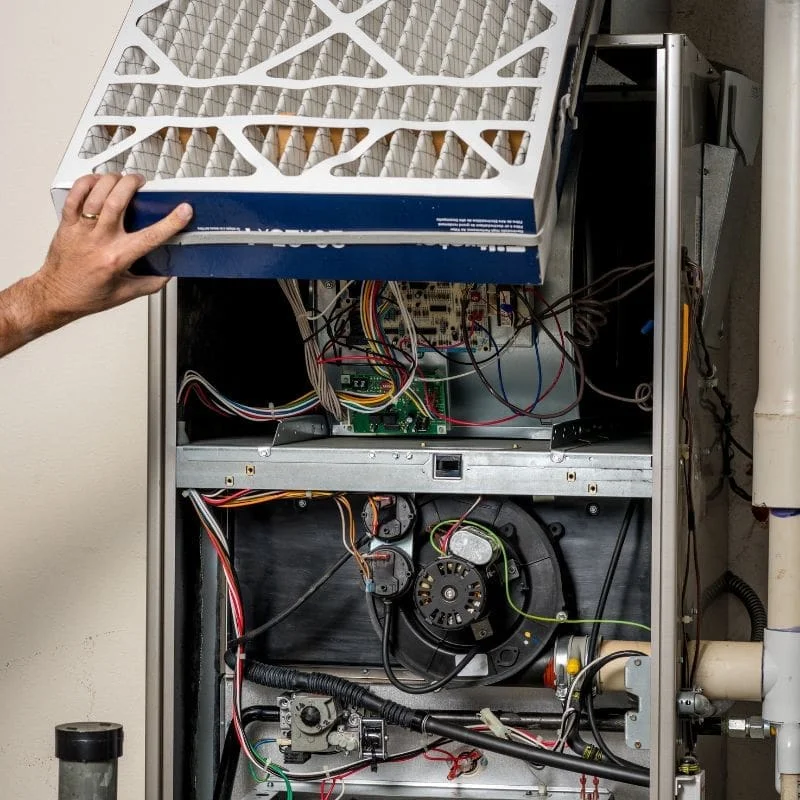
An eye-level shot captures the internal components of a silver-colored furnace against a white wall. At the top, a hand with a silver ring on the ring finger lifts a thick, white, pleated air filter. Below the filter, various electrical components, including green and tan circuit boards and a multitude of colorful wires (white, red, yellow, and blue), are visible. In the bottom half of the furnace, a black circular fan motor is mounted, surrounded by more wires and a black, corrugated hose. To the right of the furnace, a white PVC pipe runs vertically.

How Do I Check If My Furnace Has A Malfunctioning Gas Valve?

A furnace gas valve is one of the most important components inside your heating system, even though it is not something most homeowners think about on a daily basis. It controls the flow of natural gas into the burners, which is what ultimately creates the heat that warms your home. When everything is working properly, the process feels automatic and seamless. You adjust the thermostat, the furnace kicks in, and warm air starts circulating through the house without any noticeable issues.

When the gas valve begins to malfunction, the entire heating process can become unreliable. You might notice inconsistent heat, delayed ignition, or even a complete lack of warmth coming from your vents. These changes often start small and gradually become more noticeable over time. Knowing what to look for can help you act early and avoid more serious furnace problems that may require urgent repair or system replacement.

What a Furnace Gas Valve Does in Your Heating System

The gas valve serves as the controlled entry point for natural gas into your furnace. When your thermostat signals that your home has reached a lower temperature than desired, the furnace control board sends an electrical signal to open the gas valve. Once open, gas flows into the burner assembly where it is ignited, producing the heat that is then pushed through your duct system and into your living spaces.

After the heating cycle is complete and the thermostat detects that the set temperature has been reached, the control system signals the gas valve to close. This stops the flow of gas and allows the furnace to shut down safely until it is needed again. This cycle repeats throughout the day, especially during colder weather, which means the valve must function accurately and consistently to maintain comfort and safety.

Early Warning Signs of a Malfunctioning Gas Valve

One of the most common early signs of a gas valve problem is when the furnace appears to run normally but does not produce heat. You may hear the blower fan turning on, but the air coming out of the vents remains cool. This often indicates that gas is not reaching the burners, even though the system is attempting to start.

Another warning sign is repeated ignition attempts without success. The furnace may click several times as it tries to light, but the burners never fully ignite. You may also notice short cycling, where the furnace turns on and off more frequently than usual, or uneven heating where some rooms feel warmer than others. In more serious situations, a faint gas smell near the furnace may appear, which should always be treated with caution.

Safe Checks You Can Do at Home

Before assuming the gas valve is faulty, it is important to check a few basic and safe areas of your system. Start by reviewing your thermostat settings to ensure it is set to heat mode and that the temperature is set higher than the current room temperature. Sometimes simple issues like incorrect settings, dead batteries, or accidental changes can make it seem like the furnace is failing.

Next, check that the furnace has power. Confirm that the furnace switch is turned on and that the circuit breaker has not tripped. You should also check the gas shutoff valve located near the furnace to ensure it is fully open. If any of these basic settings are off, the furnace may not operate correctly even if the gas valve itself is in good condition.

Why Gas Valve Problems Happen

Gas valve problems often develop slowly over time due to normal wear and tear. Inside the valve are small mechanical and electrical components that must respond precisely to signals from the furnace control board. As the system ages, these components can become less responsive, leading to delayed opening, incomplete closure, or inconsistent gas flow.

Environmental factors can also contribute to issues. Dust buildup inside the furnace, vibration from regular operation, and general aging of internal parts can all affect performance. Electrical communication problems between the control board and gas valve may also cause the valve to misfire or fail to open at the correct time, leading to heating interruptions.

When to Seek Professional Furnace Help

If basic checks do not resolve the issue and your furnace continues to struggle, it is important to stop troubleshooting and seek professional help. Gas systems involve safety risks, and diagnosing a gas valve properly requires specialized tools and training. Attempting repairs without experience can lead to unsafe conditions or further damage to the system.

In situations where heating is inconsistent, ignition keeps failing, or a gas smell is present, contacting a technician who offers furnace repair in Auburn WA is the safest step. Homeowners often turn to professionals to identify whether the gas valve is the actual cause or if another part of the system is responsible for the issue. A trained technician can perform accurate testing and recommend the correct solution.

How to Prevent Future Gas Valve Issues

Regular maintenance plays a major role in preventing gas valve problems. During scheduled furnace inspections, technicians clean internal components, check electrical connections, and test gas pressure levels. This helps ensure that the system is operating within safe and proper conditions before colder weather increases demand.

Another simple but important step is changing your air filter regularly. A clogged filter can restrict airflow, forcing the furnace to work harder than necessary. Over time, this added strain can affect multiple components, including the gas valve. Keeping the system clean and well maintained helps reduce unnecessary wear and supports long term reliability.

A malfunctioning gas valve can affect your entire home heating experience, often starting with subtle signs like weak heating or inconsistent furnace cycles. These early symptoms should not be ignored, as they can gradually develop into more serious issues that impact comfort and system performance.

While homeowners can safely perform basic checks, deeper furnace issues should always be handled by trained professionals. With timely attention and proper maintenance, your heating system can continue operating safely and efficiently, keeping your home comfortable throughout the colder seasons. If you want to learn more, visit https://www.essentialheatandac.com/.

How Often Should You Replace Your HVAC Air Filter? | Home Maintenance Guide

Keeping your HVAC system in good condition often comes down to one simple habit that many homeowners tend to overlook. Replace the air filter on time. It is a small task, but it plays a big role in how comfortable your home feels, how clean your indoor air is, and how efficiently your system runs throughout the year. The air filter works quietly in the background every day, trapping dust, dirt, pollen, pet hair, and other particles before they circulate through your home or build up inside the system.

When the filter is clean, air flows smoothly, and the HVAC system does its job without extra effort. When it is dirty, airflow becomes restricted, the system works harder, and indoor air quality can drop without you noticing right away. This is why understanding how often to replace it is so important for any homeowner.

General Timeline for Replacing an Air Filter

For most homes, the air filter should be replaced every one to three months. This is a general guideline because every household is different. Some homes run their HVAC system almost all day, especially during extreme heat or cold, while others only use it occasionally. The more the system runs, the faster the filter collects dust and debris.

A one month replacement schedule is often ideal for homes with heavy usage or higher indoor activity, especially for households that follow HVAC service in Auburn WA recommendations. A two to three month cycle may work for lighter usage, but it is still important to check the filter regularly instead of relying only on time. Even if a filter has not reached the end of its expected lifespan, it may still become dirty faster depending on conditions inside the home. 

How Your Home Environment Affects Filter Life

Every home has different factors that influence how quickly an air filter becomes dirty. One of the biggest factors is whether pets live in the home. Dogs and cats shed hair and dander that quickly collect in the filter. Even small pets contribute to the buildup over time, and in homes with multiple pets, filters often need changing more frequently than expected.

Dust levels inside and outside the home also make a difference. Homes near busy roads, construction areas, or dry environments tend to pull in more airborne particles. Everyday activities like cleaning, cooking, and opening windows can also increase how quickly the filter fills up.

The number of people living in the home matters too. More people usually means more movement, more fabric particles, and more dust being stirred into the air. All of this eventually ends up trapped in the filter.

Signs That Your Air Filter Needs Replacing

Even without following a strict schedule, your HVAC system often shows signs when the air filter needs attention. One of the most common signs is reduced airflow from vents. If the air feels weaker than usual, it may be because the filter is clogged and blocking movement.

Another sign is increased dust around the home. If surfaces seem to get dusty faster than normal, the filter may not be trapping particles effectively anymore. You may also notice the system running longer than usual to reach the set temperature, which often indicates restricted airflow. Some homeowners also notice uneven temperatures in different rooms. When air is not circulating properly, certain areas may feel warmer or cooler than others.

Types of Air Filters and Their Lifespan

The type of air filter used in your HVAC system also affects how often it should be replaced. Basic fiberglass filters are the most affordable option, but they capture fewer particles and usually need to be replaced more often, often every month.

Pleated filters are more common in residential systems because they capture smaller particles and generally last longer. Depending on usage, they may last between one and three months.

Higher efficiency filters can trap even finer particles, but they can also fill up more quickly in homes with pets, dust, or heavy system use. Regardless of filter type, regular checking is still important because no filter lasts indefinitely.

What Happens When You Do Not Replace the Filter

Skipping air filter changes can lead to several problems over time. When the filter becomes clogged, the HVAC system has to work harder to move air through it. This extra strain can increase energy usage and lead to higher utility bills.

Restricted airflow can also affect system performance. The HVAC unit may struggle to maintain consistent temperatures, and some parts of the system may wear out faster due to added stress. Over time, this can lead to more frequent repairs or a shorter system lifespan.

Indoor air quality is also affected. A dirty filter cannot trap dust and allergens effectively, so they continue circulating through the home. This can make the air feel heavier and less comfortable, especially for anyone sensitive to dust or pollen.

How to Check Your Air Filter

Checking your air filter is a simple task that only takes a few minutes. Most filters are located in a return vent or inside the HVAC system. Once the system is turned off, the filter can be removed easily.

A quick way to check its condition is to hold it up to a light source. If light passes through easily, it may still be usable. If it looks dark, gray, or heavily covered in dust, it is time to replace it. Replacing the filter is usually straightforward. The new filter should be placed in the same direction as the old one, following the airflow arrows on the frame.

Simple Habits That Help Extend HVAC Performance

While replacing the air filter is the most important step, a few simple habits can also help improve overall HVAC performance. Keeping vents clear of furniture or curtains allows air to move freely throughout the home. Closed doors and windows while the system is running can help reduce the amount of outdoor dust entering the space.

Regular cleaning around vents and return air grills can also reduce buildup that eventually reaches the filter. Setting a reminder on your phone or calendar can help you stay consistent with filter checks, especially in busy households.

Knowing how often to replace your air filter is one of the easiest ways to keep your HVAC system running smoothly. While the general guideline is every one to three months, the right timing depends on your home environment, system usage, and indoor air needs.

Staying consistent with this simple maintenance task helps improve indoor air quality, supports better system efficiency, and reduces unnecessary strain on your HVAC system. It is a small step that makes a noticeable difference in everyday comfort and long-term performance, without requiring much time or effort.

For information, visit this website: https://www.essentialheatandac.com/

Ductless Mini Split after maintenance

Why AC Size Can Make or Break Home Comfort

An air conditioner should match your home, not fight it. A unit that is too large can cool the air fast and shut off before it pulls enough moisture from the room. A unit that is too small may run for hours and still leave warm spots behind. Both problems can raise bills and wear down parts sooner. That is why size matters more than many homeowners think. Working with local HVAC installers in Bellevue can help you compare your space, airflow, insulation, and comfort goals, so your next system fits your home and works better every day for you.

Signs Your AC Is Too Big

Short Cycles Cut Cooling Too Soon

A large air conditioner can lower the temperature very fast. That may sound good at first, but it often leads to short run times. The unit turns on, cools the area near the thermostat, and shuts off before the rest of the home feels right. This pattern can leave some rooms cool and others warm. You may notice the unit starting and stopping many times throughout the day. That stop and start pattern can strain parts and raise power use. It can also make the home feel less steady from one hour to the next. If your AC rarely runs for long, that can point to a size problem, not just a thermostat issue or a hot afternoon.

Damp Air Stays Inside the Home

An air conditioner does more than cool the air. It also pulls moisture from it. A unit that is too big may shut off before it removes enough moisture from the home. That can leave the air feeling damp, sticky, or heavy, even when the temperature looks fine on the thermostat. You may feel clammy in the living room or bedroom, mainly on warm days. Windows may fog more often, and the home may never feel fully comfortable. This problem shows up a lot in homes where the AC cools fast but does not stay on long enough to dry the air. Good comfort needs both the right temperature and the right indoor moisture level.

Signs Your AC Is Too Small

Long Run Times Push Bills Higher

A small air conditioner often runs for long stretches because it cannot cool the space fast enough. On hot days, it may stay on for hours and still struggle to hit the thermostat setting. That long run time uses more power and can raise your monthly bill. The unit keeps working, but the home may still feel warmer than you want. You may hear the system running most of the afternoon and into the evening. That can also put more strain on parts like the fan motor and compressor. Over time, that added strain can lead to more service calls and earlier part failure. If your AC seems to work all day without much relief, the unit may be too small for the space.

Warm Spots Stay From Room to Room

A small AC can have a hard time cooling every part of the home. Some rooms may feel fine, while others stay warm and stuffy. This often shows up in upstairs bedrooms, rooms with large windows, or areas that get more sun during the day. The unit may cool the space near the thermostat first, but it cannot keep up with the rest of the home. That leaves uneven temperatures from room to room. You may move from one area that feels decent to another that feels hot right away. Poor airflow can add to the problem, but size still plays a big part. If warm spots stay around day after day, your AC may not have enough cooling power for the job.

Problems a Bad AC Size Can Cause

Extra Wear Hits Parts Faster

A bad AC size can wear out the system faster than many homeowners expect. A unit that is too big may turn on and off again and again throughout the day. A unit that is too small may run for long periods without enough rest. Both patterns can strain key parts inside the system. The compressor, fan motor, and other moving parts all work harder under that stress. Over time, that can lead to more repairs and a shorter system life. You may also notice strange sounds, weak airflow, or slower cooling as parts start to wear down. A system should run in a steady way. If it does not, size may be the reason behind the trouble.

Uneven Comfort Makes Rooms Hard to Use

A bad AC size can make daily life in the home less comfortable. One room may feel cool and pleasant, while another feels warm, sticky, or stale. This can affect bedrooms, home offices, living rooms, and other spaces you use often. You may avoid certain rooms during the hottest part of the day because they never feel right. A unit that is too large can cool some areas too fast and shut off before the rest of the home catches up. A unit that is too small may keep running but still fail to cool every room. Good comfort should feel steady from space to space. When it does not, the AC size may be part of the problem.

What Shapes the AC Size Your Home Needs

Square Footage Is Only One Part

Many people think square footage tells the full story, but it does not. A home with the same floor area can need a very different AC size from another home of equal size. The layout matters a lot. An open living area may move air in a different way than a home with many small rooms and closed doors. The number of people in the home can also affect indoor heat. Kitchens, lights, and appliances add heat too. A home that gets strong afternoon sun may feel warmer than one with more shade. Square footage gives a starting point, but it does not give the full answer. Good sizing looks at the whole space and how that space holds and moves heat.

Windows Insulation and Ceiling Height Matter

Windows, insulation, and ceiling height all affect how hard your AC has to work. Large windows can let in more heat, especially in rooms that face direct sun for hours. Older windows may let heat enter faster than newer ones. Insulation also plays a big part. A well sealed attic and well insulated walls can slow heat gain and help cool air stay indoors longer. Poor insulation can let cooled air escape and outdoor heat move in. Ceiling height matters too. A room with tall ceilings holds more air than a room with lower ceilings, so it may need more cooling power. These details change the load on the system. That is why two homes with the same floor area may need very different AC sizes.

Steps to Take Before You Replace Your Unit

A Load Test Gives Better Numbers

Before you replace an air conditioner, it helps to get real numbers for your home. A load test does that. It looks at the size of the home, the number of rooms, window area, ceiling height, insulation, sun exposure, and air leaks. It also checks how heat builds up indoors during the day. That gives a clearer picture than picking a unit based only on the old system or the square footage. An older unit may have been too big or too small from the start. If you replace it with the same size, the same problems can stay. A load test helps match the new unit to the home as it stands today, not to a guess or a rough rule.

Ductwork and Airflow Need a Close Look

A new AC unit can still struggle if the ductwork has problems. Air has to move well through the system for the home to feel comfortable. Leaky ducts can send cooled air into the attic, crawl space, or wall cavities instead of into the rooms. Ducts that are too small can choke airflow and make the system work harder. Dirty vents, blocked returns, and poor duct layout can also lead to weak airflow and uneven room temperatures. Before replacing the unit, it helps to check static pressure, airflow at vents, and the condition of the ducts. That work can show why some rooms stay warm or why the old unit never seemed to cool the home in a steady way.

Find the Best AC Fit With Essential Heating and Air

The right AC size keeps your home cooler, drier, and more comfortable through the day. It can lower strain on parts, cut waste, and help each room feel more even. A poor fit can do the opposite. You may notice short cycles, sticky air, weak airflow, or nonstop run times that drive up costs. Essential Heating and Air works with homeowners who want a system that matches the space, ductwork, and cooling needs of the house. Visit us at 1520 14th St., NW, Unit A, Auburn, WA 98001, or call (253) 576-7251 for AC sizing, replacement, and installation help from our team.

Why Would My Heating System Turn On And Off Frequently

Why Would My Heating System Turn On And Off Frequently

A heater should run in bursts, then take a break. If it keeps turning on and off, it can get annoying and strain parts. Start by checking airflow. Swap the filter if it’s dirty and clear any blockages from the vents. Also, inspect the return grille for dust buildup. Thermostat placement is important too. If it’s near a draft or a sunny spot, it might trick the system. Many people face the same issues with heating and cooling in Tacoma WA each winter. Keep track of cycle times, and pay attention to any unusual sounds or smells.

Common Signs Of Short Cycling

What A Healthy Heat Cycle Looks Like

A healthy heating cycle runs for a longer period of time to warm the home. The system should reach the temperature you’ve set and stay on until the job is done. During a normal cycle, the heater won’t turn off too soon. This allows the air to warm evenly across all rooms. You’ll notice fewer starts per hour, which saves energy and reduces wear on the system. 

With a healthy heat cycle, you won’t feel extreme cold or hot spots in different rooms. This even heat makes the house feel more comfortable, with no sudden fluctuations in temperature.

Red Flags That Point To A Problem

When your heater keeps turning on and off quickly, it’s called short cycling. This happens when the system starts every few minutes but doesn’t run long enough to heat the space properly. The heater may shut off before the rooms warm up, leaving you chilly. Another sign of short cycling is temperature swings near the thermostat. 

If the temperature around it drops too quickly or the thermostat is reading incorrectly, it can make the system cycle on and off. This problem wastes energy, raises bills, and causes wear and tear. Identifying short cycling early can help prevent more expensive repairs.

Thermostat And Control Issues

Placement And Settings That Trigger Extra Starts

The thermostat is sensitive to its surroundings. If it’s near lamps, TVs, or windows with direct sunlight, it may detect extra heat and turn off too soon. This causes the system to start again too quickly, wasting energy. Drafts from doors or windows can cool the thermostat fast, tricking it into calling for more heat. 

A thermostat’s settings are important too. If it’s set to the wrong mode or a schedule that doesn’t match your needs, it may cause more frequent cycling. Even the fan setting can make a difference. Adjusting these factors can help stop unnecessary starts.

Power, Wiring, And Sensor Glitches

Weak batteries in a thermostat can cause dropouts, making the system turn off unexpectedly. This leads to the heater starting and stopping randomly. Loose or damaged wires also cause problems. A poor connection can lead to quick shutoffs, disrupting the heat cycle. 

For smart thermostats, the cycle rate setting could be too tight. If it’s set to turn on and off too often, it will create short cycling. Timely maintenance of the thermostat and its wiring can keep your heating system running smoothly and prevent these issues from disrupting comfort in your home.

Airflow Problems That Force Quick Shutoffs

Filter And Vent Blocks That Choke Air

A clogged filter is one of the most common reasons for airflow problems. It restricts the amount of air flowing through your system. This can make the heater work harder to push air, which may cause it to shut off too soon. Also, closed vents in unused rooms trap heat in the ducts, leading to uneven temperatures. 

If the air can’t flow properly through the system, it can cause the heater to short cycle. Furniture or rugs blocking return grilles is another issue. These grilles help pull air back into the system. If blocked, the heater can’t function efficiently, leading to more frequent shutdowns.

Blower And Duct Trouble That Cuts Flow

If the blower wheel builds up dust or dirt, it slows down the airflow. A slower blower means less air reaches the rooms, and the system might shut off early to protect itself. Problems with the belt or motor can also reduce air volume. If the motor is failing or the belt is worn out, it may not be able to move air properly through the system. 

Leaky ducts add another layer of trouble. If there are holes or cracks in the ductwork, air can escape before it reaches the rooms. This lowers the system’s efficiency and can cause it to stop frequently.

Overheating And Safety Switch Trips

Heat Buildup From Poor Air Movement

When the system can’t move air properly, heat builds up inside the unit. Dirty components like the blower wheel or coils trap heat. This raises the temperature inside the unit, which can trigger the safety switch to shut the burner off quickly. Closed vents push heat back into the system instead of letting it circulate. This makes the unit overheat faster. 

The high-limit switch is designed to stop the burner if it gets too hot, but if the system constantly overheats, it will cause the heater to cycle on and off more frequently. Cleaning and keeping vents open can help solve this issue.

Venting And Flame Rollout Warning Signs

Blocked vents and flues are serious problems. A blockage can trap hot gases inside the unit, which increases the risk of overheating and short cycling. If the vent is clogged, the gas can’t escape properly, and the system may shut off to protect itself. The rollout switch, another safety feature, trips if it detects unsafe flame behavior. 

This is a warning sign that something is wrong with the burner or combustion chamber. If you notice a soot smell or see scorch marks, it’s a sign of a dangerous buildup. Call for service immediately, as these issues could lead to serious damage or fire risks.

Fuel And Ignition Problems That Break The Burn

Sensors And Igniters That Fail Mid-Start

The flame sensor detects whether the burner is on. Over time, it can get dirty, causing it to shut down the system even if the flame is still burning. If the sensor can’t sense the flame, it forces the system to stop. Igniters play a key role in starting the burner. 

When they wear out, they struggle to create the spark needed to ignite the fuel. This prevents the system from starting properly, causing it to turn off. A weak pilot light can also be to blame. If the pilot goes out, the burner won’t stay on, and the system keeps trying to restart, wasting energy.

Gas Supply And Combustion Air Issues

A drop in gas pressure can cause the flame to flicker or go out, making the system shut off. When the gas pressure isn’t steady, the burner can’t maintain the heat, and the unit turns off. Airflow problems also play a big role in keeping your system running smoothly. Blocked intake or exhaust vents stop the heater from pulling in the air it needs. As a result, it shuts off. High-efficiency units face another issue: clogged drains.

These systems rely on proper drainage for moisture. When drains clog, it trips the safety switch, forcing the system to stop. Keeping the gas pressure steady and the vents clear helps prevent these issues from disrupting your system.

Get Reliable HVAC Solutions from Essential Heating and Air

Frequent starts and stops can waste fuel and damage your system over time. This also leaves rooms feeling cold. Start by checking airflow. A clogged filter can restrict air, so swap it out for a clean one. Open supply and return vents, and clear any blockages from the return grilles. If furniture is in the way, it can stop air from circulating properly. The thermostat should also be checked. Keep it away from lamps, sunny windows, and drafts, which could affect its readings. 

If the problem continues, call a technician to test flame sensors, limit switches, and gas pressure. These checks help your system run longer and heat more evenly. If short cycling keeps causing issues, Essential Heating and Air can inspect your system and offer the right solution. Visit us at 1520 14th St., NW, Unit A, Auburn, WA 98001, or call (253) 576-7251 for dependable heating service.

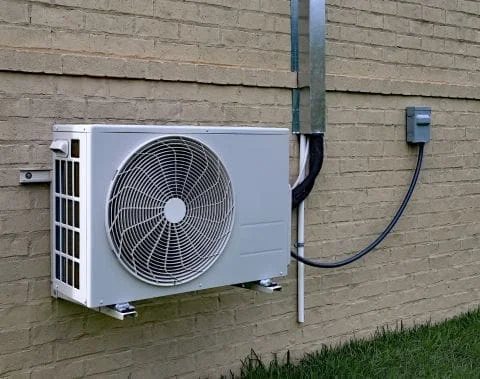
A close-up shot of a gray, rectangular air conditioning unit, specifically a ductless mini-split system, mounted on a tan brick wall. The unit has a large circular fan grille on the front and is connected to the building by wiring and pipes.

What Causes a Burning Smell from Your Heating System?

If your heating system smells like burning when it turns on, it’s often due to a few common causes. The scent could be a sign of overheating or a malfunction. It’s important to address these issues quickly to avoid further damage. If you encounter problems with heating and cooling in Tacoma, always engage a professional. Taking prompt action can save you from costly repairs. We’ll go over the main reasons behind burning smells in heating systems and how to deal with them effectively.

Dust and Debris in the Heating System

How Dust Affects Heating Components.

Dust buildup in your heating system can cause several issues. When dust settles on heating elements and burners, it blocks airflow. This makes it harder for the system to generate heat. The system then has to work harder to reach the desired temperature, which causes it to overheat. As it continues to work harder, you might notice a burning smell when the system turns on. Over time, dust buildup can damage key components, leading to more expensive repairs. If left unaddressed, this buildup restricts airflow, lowering the system’s overall efficiency and lifespan.

Cleaning Tips to Prevent Dust Build-Up

To avoid dust buildup, clean your heating system every few months. Start by turning off the power and allowing it to cool down. Use a vacuum with a brush attachment to clean vents and grilles, removing dust and debris. Change the air filters every three months to stop dust from accumulating inside the system. If your heating system uses ducts, have them cleaned once a year to get rid of trapped dust. These cleaning steps improve airflow, reduce the risk of overheating, and help the system run efficiently, lowering the chances of a burning smell.

Overheating Heating Elements

Why Overheating Happens

Overheating in heating systems is a common problem. This usually happens when the system is overworked or there is a malfunction. The heating element in the system is designed to heat up when the unit is turned on. However, if the system runs too long or the components are faulty, the element can get too hot. This causes the unit to struggle and eventually overheat. Overheating can also happen if the airflow is blocked by dirty filters or vents. When the air can’t circulate properly, the system works harder, causing the heating elements to overheat.

How to Handle Overheating

If your heating system starts to overheat, turn it off immediately to prevent further damage. Let the system cool down before checking for any obvious problems, like a dirty air filter or blocked vents. Make sure that air flows freely through the system. If the problem continues, have a professional check the heating elements and other components for damage. If you spot any faulty parts, get them repaired or replaced as soon as possible. Proper maintenance helps prevent overheating problems and keeps your system efficient.

Faulty Wiring or Electrical Issues

Recognizing Signs of Electrical Problems

Electrical issues in your heating system can be dangerous. Common signs include tripped circuit breakers, sparking sounds, or flickering lights when the system is running. If the system doesn’t turn on or stops working suddenly, this could signal an electrical problem. A burning smell or faint smoke near the unit also points to trouble. If the wires inside the system are loose or damaged, they may overheat, creating a fire hazard. Pay close attention to any unusual noises or smells. These can indicate serious issues that need immediate professional attention.

What to Do About Electrical Hazards

If you notice signs of electrical issues, turn off the power to the system right away. Do not attempt to fix electrical problems yourself, as this can be dangerous. Always contact a professional to handle any electrical repairs. If you notice damaged wires or a burning smell, reach out to a technician as soon as possible. They can inspect the system, locate the problem, and carry out any necessary repairs. Timely attention to electrical hazards can prevent serious damage or even fires, so don’t wait to seek professional help.

Clogged Air Filters or Vents

How Clogged Filters Impact Your Heating System

Clogged filters can affect your heating system in many ways. When dust, dirt, and other debris fill up the filter, airflow becomes restricted. This makes it harder for the system to push warm air into your home. As the system works harder, it may overheat, causing a burning smell. The extra effort can also damage the system’s components, making repairs more costly. Poor airflow can also result in uneven heating, leaving some rooms colder than others. In addition, restricted airflow reduces the system’s overall efficiency, causing higher energy bills. It’s important to address clogged filters to keep everything working properly.

How to Clean and Replace Filters

Cleaning or replacing your filters is simple but important. First, turn off your heating system to avoid any accidents. Once the system is off, remove the filter and check its condition. If it’s a reusable filter, vacuum it or wash it with water. If it’s a disposable filter, simply replace it with a new one. Change the filter every few months to avoid dust buildup. If your home has pets or is particularly dusty, you might need to clean or replace the filter more often. This helps the system run efficiently, saving energy and preventing future issues.

Gas Leaks or Malfunctions

Identifying Gas Odors

Gas leaks are dangerous and should be taken seriously. A common sign of a gas leak is a strong odor of rotten eggs. This smell is added to natural gas to help people identify leaks. If you smell gas in your home, it could be coming from a pipe, appliance, or the heating system itself. Another sign of a possible gas leak is hissing or whistling sounds near gas lines or appliances. If you notice these smells or sounds, don’t wait to address the issue. Gas leaks can cause fires or explosions if not dealt with immediately. Always take precautions and act fast.

Handling Gas Leak Emergencies

If you suspect a gas leak, act immediately to protect yourself and others. First, turn off the gas supply at the main valve if you can safely access it. Do not turn on any lights, appliances, or anything that could create a spark. Leave the house right away and go to a safe location. Avoid using your phone inside the house to prevent sparks from igniting the gas. Once you’re outside, call your gas company or emergency services. Do not return to the house until it is cleared by a professional. Taking quick action in a gas leak emergency can save lives.

Keep Your Heating System Running Safely with Essential Heating and Air

Burning smells from your heating system should never be ignored. They often signal issues such as dust build-up, overheating components, electrical problems, or even gas leaks. These problems can worsen if not addressed promptly. Regular maintenance and quick attention can help prevent costly repairs. If your heating system is giving off an unpleasant odor, don’t wait. Let Essential Heating and Air assist you in diagnosing and fixing the issue. Visit us at 1520 14th St., NW, Unit A, Auburn, WA 98001, or call (253) 576-7251 for reliable service and fast repairs.

The image features a sleek, white air conditioning unit installed high on a white wall, near a suspended ceiling and blue and white curtains.

Why Your Upstairs Stays Hot While Downstairs Stays Cold (And How to Fix It)

You adjust the thermostat again. Nothing changes. Your upstairs bedroom feels like a sauna in July, but your downstairs living room is perfectly comfortable. Come winter, the opposite happens: downstairs is freezing while upstairs is toasty.

If this sounds familiar, you’re not alone. This temperature imbalance is one of the most common comfort problems we encounter in homes throughout the Seattle, Tacoma, and Puyallup areas. The good news? Once you understand what’s causing it, the right solution can make your entire home comfortable again.

Here’s what’s really happening in your home, and what can actually help.

The Real Reason Heat Won’t Stay Put

Your home isn’t fighting you. It’s basic physics.

Hot air rises because it’s lighter than cold air. This creates something called the stack effect: warm air naturally floats upward through your home, pushing toward the upper floors and attic. Meanwhile, cooler air gets drawn down to the lower levels.

During summer cooling, your AC works overtime trying to cool the second floor, but that hot air keeps rising. In winter, your furnace heats downstairs, and all that warmth immediately travels upstairs.

But physics isn’t the only culprit. Most homes have a second problem working against them.

Your Single Thermostat Is Making Decisions for Your Entire House

Here’s the issue: most homes run on a single-zone HVAC system. One thermostat, usually placed downstairs, controls heating and cooling for every room.

When that downstairs thermostat reads 72°F, it tells your system everything is fine. Meanwhile, your upstairs bedrooms might be sitting at 78°F or higher. The system doesn’t know, and it doesn’t adjust.

If the thermostat is upstairs, the opposite happens. Your furnace or AC keeps running until the upper floor feels right, which means your downstairs gets overcooled in summer or overheated in winter.

This single-zone limitation is why so many homeowners in areas like Auburn, Bellevue, and Federal Way struggle with comfort, especially in two-story homes built before modern zoning systems became common.

At Essential Heating and Air, we see this pattern constantly during service calls. The system itself works fine, but it was never designed to handle the temperature differences between floors.

What’s Making Your Problem Worse

Beyond rising heat and single-zone systems, several other factors can intensify the imbalance:

Poor attic insulation lets summer heat pour in from your roof or allows winter warmth to escape through the ceiling. If your attic insulation is old, compressed, or incomplete, your upstairs takes the hit.

Leaky or imbalanced ductwork loses conditioned air before it reaches the rooms that need it most. We often find that ducts serving upper floors weren’t sized correctly, or air leaks in the duct system waste 20-30% of the air your system produces.

Sun exposure on upper floors heats rooms faster than your AC can compensate. South and west-facing bedrooms get hammered during afternoon hours.

Closed doors and blocked vents restrict airflow and create pressure imbalances. Even a partially closed interior door can prevent proper air circulation.

When several of these issues combine, you end up with temperature swings that no amount of thermostat adjustment will fix. You need a different approach.

Professional Solutions That Actually Work

Let’s talk about what really helps.

Duct Sealing and Airflow Balancing

Before considering major upgrades, a professional assessment of your existing ductwork often reveals fixable problems. Sealing duct leaks and adjusting airflow dampers can dramatically improve temperature distribution without replacing your entire system.

This approach works well when your furnace and AC are relatively new but the airflow between floors feels uneven. We adjust the system to send more conditioned air where you need it most.

HVAC Zoning Systems

Zoning transforms your single-zone system into multiple independent zones, typically one per floor. Automated dampers in your ductwork open and close based on separate thermostats, so your upstairs and downstairs can maintain different temperatures.

For example, you can keep your upstairs cooler at night for sleeping while your downstairs stays warmer. During the day, reverse it if no one is upstairs.

The U.S. Department of Energy reports that homeowners can save up to 30% on heating bills by combining zoning systems with programmable thermostats. The system only conditions the spaces you’re actually using, which reduces wasted energy in empty rooms.

Zoning works especially well in homes throughout Renton, Kent, and Kirkland where the existing ductwork is in good shape but the single thermostat creates constant discomfort.

Ductless Mini-Split Systems

If your home has ductwork challenges or you want maximum flexibility, ductless mini-splits offer the most precise zone control available.

Each indoor unit operates independently with its own remote control or thermostat. You can install one in your upstairs master bedroom, another in a bonus room, and create truly customized comfort zones without modifying your existing ductwork.

According to ENERGY STAR data, mini-split systems use up to 60% less energy than standard electric resistance heating. Many current models exceed 30 SEER ratings, which translates to exceptional efficiency because there are no ducts to leak air and variable-speed compressors adjust precisely to your needs.

We often recommend mini-splits for homes in Sammamish, Issaquah, and Woodinville where additions or second floors were added after the original HVAC installation. They’re also ideal for older homes that never had central ductwork.

You can use mini-splits as your entire HVAC services in Seattle solution or as a supplement to your existing furnace and AC system.

System Upgrades and Replacements

Sometimes the furnace or AC itself is the limitation. Older single-stage systems run at full blast or not at all, which creates temperature swings.

Variable-speed furnaces and multi-stage air conditioners adjust their output gradually, running longer at lower speeds to maintain even temperatures across floors. This approach works better for multi-story homes because the system can fine-tune airflow instead of blasting conditioned air and then shutting off.

If your current equipment is more than 15 years old and you’re experiencing comfort issues, replacement might make sense. Since January 2026, federal regulations require all new residential AC units, heat pumps, and mini-splits to use refrigerants with a global warming potential (GWP) below 700. This includes options like R-454B or R-32, which work with higher-efficiency equipment designs.

These newer systems often provide better temperature balance as a side benefit of their improved technology.

Smart Thermostats with Remote Sensors

Adding a smart thermostat with remote sensors can help existing systems perform better. Place sensors upstairs and downstairs, and the thermostat averages the readings to make smarter heating and cooling decisions.

This approach reduces overcorrections where the system runs too long trying to satisfy one location while overshooting comfort in another. It’s not a complete fix for severe imbalances, but it helps smooth out minor differences.

What the 2026 Refrigerant Rules Mean for You

If you’re considering system replacement or adding mini-splits this year, you should know about recent regulatory changes.

As of January 2026, the EPA prohibits installation of new residential systems using high-GWP refrigerants like R-410A. All new central air conditioners, heat pumps, and ductless mini-splits must use refrigerants with GWP below 700.

Systems manufactured or imported before 2025 can still be installed if available, but moving forward, you’ll get equipment using more efficient refrigerants like R-454B or R-32. Repairs on your existing system with older refrigerants remain allowed.

These rules push the industry toward better efficiency, which can help with temperature balance when you upgrade. Washington state’s energy code also encourages high-efficiency options through various credits and requirements.

At Essential Heating and Air, we stay current with these regulations to help homeowners in Des Moines, Lakewood, and Lynnwood choose compliant systems that deliver better long-term performance.

The Energy Savings Side of Solving This Problem

Fixing uneven temperatures doesn’t just improve comfort. It typically reduces your energy bills too.

Zoned systems reduce heating costs by up to 30% because you’re not wasting energy conditioning empty spaces. If no one is upstairs during the day, why heat or cool it?

Ductless mini-splits can be 30-40% more efficient than traditional central systems, primarily because they eliminate duct losses entirely and use variable-speed technology that runs more efficiently at partial loads.

Even simpler fixes like duct sealing recover lost conditioned air and help your existing system work less hard to maintain comfort.

When we help homeowners throughout Burien, Covington, and Enumclaw solve temperature imbalances, lower utility bills often follow as a welcome side effect.

Don’t Try to Fix This Yourself

We understand the temptation to adjust vents, tape ducts, or add portable heaters as quick fixes. Sometimes these help temporarily, but they usually don’t address the underlying issues.

Professional assessment identifies the specific combination of factors affecting your home. What works for a house in Tacoma with poor attic insulation might be completely different from what helps a home in Redmond with undersized ductwork.

At Essential Heating and Air, we evaluate your entire system, check insulation, inspect ductwork, and measure airflow before recommending solutions. This approach gets you to the right fix faster instead of guessing and spending money on things that don’t help.

Get Comfortable in Every Room

Your home should feel comfortable on every floor, in every season. When upstairs stays hot and downstairs stays cold, or vice versa, it’s usually a solvable problem once you know what’s causing it.

Whether your home needs duct balancing, a zoning system, ductless mini-splits, or a full system upgrade, the solution depends on your specific situation. Professional evaluation gives you a clear path forward.

Ready to stop fighting with your thermostat? Essential Heating and Air provides professional heating and cooling services in Auburn, WA and throughout the Seattle area, helping homeowners improve comfort and energy efficiency year-round. We’ll assess your home’s specific needs and recommend the right solution for your situation.

Contact Essential Heating and Air to schedule an evaluation and find out what’s causing your temperature imbalances.

Frequently Asked Questions

Why is my upstairs so much hotter than downstairs in summer?

Hot air rises naturally due to the stack effect, and your AC has to work against this physics principle. Upper floors also receive more direct sun exposure and heat from your attic. If you have a single thermostat downstairs, your system may shut off before adequately cooling the upper level.

Can closing downstairs vents force more air upstairs?

This seems logical, but it often backfires. Closing too many vents increases pressure in your ductwork, which can reduce overall system efficiency and strain your furnace or AC. Professional airflow balancing adjusts dampers correctly without creating system problems.

Will a bigger AC or furnace solve uneven temperatures?

Usually not. Oversized equipment cycles on and off too quickly, which creates comfort swings and reduces efficiency. The problem is typically distribution and zoning, not system size. A properly sized system with better airflow management performs better than an oversized one.

How much does a zoning system cost compared to mini-splits?

Costs vary significantly based on your home’s layout and existing ductwork condition. Zoning systems require motorized dampers, additional thermostats, and sometimes duct modifications. Mini-splits require new indoor and outdoor units but no ductwork changes. A professional assessment can compare options specific to your situation.

Are mini-splits good for heating in Seattle’s climate?

Yes. Modern cold-climate mini-splits work efficiently down to temperatures well below what Seattle typically experiences. Many homeowners in western Washington use them as primary heating sources. ENERGY STAR-certified models provide efficient heating and cooling year-round.

What’s the first step if I’m experiencing this problem?

Schedule a professional HVAC assessment. A qualified technician from Essential Heating and Air can evaluate your insulation, ductwork, equipment, and airflow to identify the specific causes in your home. This gives you a clear diagnosis before spending money on potential solutions.

Is Ductless Heating Enough to Keep a House Warm in Winter?

Is Ductless Heating Enough to Keep a House Warm in Winter?

Your heating bill just arrived, and the number made you wince. Or maybe you’re staring at those old electric baseboards, wondering if there’s a better way to stay warm without breaking the bank. You’ve heard about ductless mini-splits, but here’s the question keeping you up at night: Can they really heat your entire home when temperatures drop?

The short answer is yes, but it depends on where you live and which system you choose. Modern ductless mini-split heat pumps have come a long way, especially the cold-climate models designed for harsh winters. In the Pacific Northwest, where winter lows typically hover between 28°F and 37°F, properly sized ductless systems can absolutely serve as your primary heat source.

At Essential Heating and Air, we’ve helped many homeowners across the Seattle-Tacoma area transition to ductless heating, and the results speak for themselves. Lower energy bills, consistent warmth, and year-round comfort without the expense of installing ductwork. But let’s dig into the details so you can make an informed decision for your home.

What Makes Modern Ductless Systems Different?

Here’s what’s changed in recent years: Technology has caught up with demand.

Older heat pumps struggled once temperatures dropped below 40°F. They’d work overtime, lose efficiency, and leave you shivering when you needed heat most. But hyper-heat and cold-climate mini-splits have completely changed the game.

These advanced systems maintain full heating capacity down to 5°F and continue operating efficiently even below that threshold. Some models work down to -13°F or -22°F while still delivering reliable warmth. For context, Seattle’s average January low sits around 37°F, with rare dips below 28°F. That means modern ductless systems operate well within their comfort zone throughout our typical winters.

The Technology Behind Cold-Weather Performance

Inverter-driven compressors are the secret weapon. Unlike traditional systems that simply turn on and off, these compressors adjust their speed continuously based on your heating needs. When it’s moderately cold, they run at lower speeds, using less energy while maintaining steady temperatures. When it gets colder, they ramp up smoothly without the energy spikes you’d see from older systems.

The result? You get consistent warmth without the temperature swings that make rooms feel stuffy one minute and chilly the next.

Cold-climate models also use specialized components designed for sub-freezing operation:

  • Enhanced vapor injection for better low-temperature performance
  • Larger heat exchangers to extract more warmth from cold air
  • Advanced defrost cycles that minimize downtime in freezing conditions
  • Optimized refrigerant flow for maximum efficiency

If you’re exploring options for reliable heating and cooling in Seattle, understanding these technological advances helps explain why ductless systems have become so popular in our region.

How Ductless Heating Performs in Pacific Northwest Winters

Let’s talk about real-world performance, not just manufacturer claims.

The Puget Sound region offers an ideal climate for ductless heating. Our winters are mild compared to the Midwest or Northeast, where temperatures regularly plunge below zero. When your coldest days rarely drop below 30°F, even standard mini-splits perform well, and cold-climate models excel.

Energy efficiency becomes the real story here. Modern ductless systems achieve HSPF ratings of 10 to 14+, meaning they deliver far more heat energy than the electricity they consume. Compare that to electric baseboards, which convert electricity to heat at a 1:1 ratio, and you’ll understand why homeowners report heating cost reductions of 25% to 50%.

Temperature Capacity by Model Type

System Type Effective Heating Range Best For
Standard Mini-Split Down to 20°F-25°F Mild winter climates
Cold-Climate Model Down to 0°F-5°F at full capacity Most residential applications
Hyper-Heat Model Down to -13°F to -22°F Areas with occasional hard freezes

The numbers tell an important story. Even during Seattle’s coldest recorded temperatures, hyper-heat models maintain efficiency levels that older heating systems can’t match.

We’ve worked with homeowners in Puyallup, Kent, Auburn, and throughout the region who rely solely on ductless heating. They report consistent comfort even during those rare weeks when temperatures stay below freezing for several days. The key is proper system sizing and installation, which we’ll discuss next.

Can Ductless Heating Work for Your Whole House?

This is where many homeowners get confused. They assume one indoor unit can heat an entire 2,000-square-foot home, and then feel disappointed when certain rooms stay cold.

The reality is simpler: Multi-zone systems with strategically placed indoor heads provide whole-home comfort. Each zone gets its own thermostat and control, so you’re not overheating bedrooms to warm up the living room.

When Single-Zone Systems Work

Open floor plans are perfect for ductless heating. If your main living area combines the kitchen, dining room, and living room without many walls, a single high-capacity unit can effectively heat that entire space. Warm air circulates naturally, and you avoid the cold spots that plague homes with traditional forced-air systems.

Homes under 1,200 square feet with good insulation often do well with a single-zone or two-zone setup. Add a second head for the bedroom area, and you’ve got complete coverage.

When You Need Multiple Zones

Larger homes or those with separated rooms benefit from multi-zone configurations. Think about your layout:

  • Two-story homes typically need at least one head per floor
  • Homes with closed-off bedrooms need individual heads for even temperatures
  • Finished basements may require dedicated units
  • Home offices or additions often need their own zones

At Essential Heating and Air, we perform detailed assessments before recommending systems. We measure your home, evaluate insulation, consider window placement, and calculate actual heating requirements. This prevents the undersizing or oversizing that leads to comfort problems and wasted money.

The Critical Role of Proper Installation and Sizing

Here’s an uncomfortable truth: The best ductless system becomes ineffective if installed incorrectly.

Load calculations determine exactly how much heating capacity your home needs. This involves complex math that accounts for:

  • Square footage and ceiling height
  • Insulation quality in walls, attic, and floors
  • Window size, type, and orientation
  • Air leakage rates
  • Local climate data
  • How you use different rooms

Skip this step, and you might end up with a system that runs constantly without providing adequate heat, or one that short-cycles and wastes energy.

Installation Factors That Impact Performance

Indoor unit placement matters more than most people realize. Mount a head too high, and heat rises to the ceiling while you sit in cold air. Place it too far from the area you want to heat, and warm air never reaches those spaces.

Professional installers consider airflow patterns, furniture placement, and room layout. They also ensure proper refrigerant line installation, which directly impacts efficiency. Even small leaks or incorrect line lengths can reduce heating capacity by 20% or more.

Insulation quality amplifies or undermines your system’s performance. A well-insulated home retains heat, allowing your mini-split to maintain comfort while running at lower speeds. Poor insulation forces the system to work harder, potentially exceeding its capacity during cold snaps.

If your home has drafty windows, inadequate attic insulation, or gaps around doors, address those issues before or alongside your ductless installation. The combination delivers the best results.

What About Those Really Cold Days?

Even in the Pacific Northwest, we occasionally see temperatures in the teens or low twenties. So what happens to your ductless system when that Arctic air mass moves through?

Hyper-heat models continue heating effectively. They might run more constantly and use more electricity, but they still maintain indoor comfort. The Coefficient of Performance (COP) remains above 2 even below 0°F, meaning you still get twice the heat output compared to the electricity consumed.

For reference, electric baseboards have a COP of exactly 1. Gas furnaces operate between 0.8 and 0.95 (80-95% efficiency). So even when working hard in very cold weather, your ductless system outperforms conventional alternatives.

Should You Keep Backup Heat?

Some homeowners choose to retain their existing furnace or add electric baseboards as supplemental heat. This provides peace of mind during extreme weather events, though it’s rarely necessary with properly sized cold-climate systems.

The decision often comes down to personal comfort levels. If you want absolute certainty that you’ll stay warm during a once-in-a-decade cold snap, backup heat makes sense. If you’re comfortable with a system that handles 99% of winter days effortlessly and might work a bit harder during rare extreme cold, a ductless-only setup works perfectly.

We help homeowners evaluate their specific situations. Factors like age, health concerns, tolerance for minor temperature fluctuations, and budget all play into the decision.

Energy Savings and Environmental Benefits

Let’s address the question on everyone’s mind: How much will you actually save?

Homeowners switching from electric baseboard heating typically see bill reductions of 40% to 50% in moderate climates like ours. Those replacing older furnaces often save 25% to 35%, depending on the furnace’s age and efficiency.

The exact savings depend on several variables:

  • Your current heating system’s efficiency
  • Your home’s insulation quality
  • How you set your thermostat
  • Electricity rates in your area
  • How much you use zone control to heat only occupied spaces

The 2025 Refrigerant Update

Recent EPA regulations mandated a shift to lower Global Warming Potential (GWP) refrigerants. New ductless systems now use R-32 or R-454B instead of older refrigerants. This change improves environmental impact without affecting cold-weather performance.

In fact, manufacturers optimized their 2025 models for these new refrigerants, often improving efficiency ratings in the process. You get better environmental stewardship and lower operating costs.

Common Concerns and Misconceptions

“Mini-splits look ugly on walls.”

Modern indoor units come in various styles, including slim designs, ceiling cassettes, and floor-mounted options. Many homeowners find them less obtrusive than bulky registers and return vents. Some appreciate the sleek, contemporary aesthetic.

“They’re too expensive compared to furnaces.”

Initial costs run higher for ductless systems, but you’re not just buying a heater. You’re also getting air conditioning, eliminating duct installation expenses, and investing in lower operating costs for the life of the system. Total cost of ownership often favors ductless when you factor in energy savings over 15-20 years.

“They require constant maintenance.”

Actually, maintenance is simpler than forced-air systems. Clean the filters monthly (takes five minutes), schedule professional service annually, and you’re done. No ductwork to clean, no yearly furnace tune-ups, and no filter changes buried in crawl spaces.

“They don’t work in old, drafty houses.”

They work, but efficiency suffers. If your home has significant air leakage or poor insulation, address those issues first. Otherwise, you’ll spend money heating the outdoors while struggling to stay comfortable inside. That advice applies to any heating system, not just ductless.

Making the Right Choice for Your Home

Every home has unique characteristics that affect heating decisions. Your square footage, layout, insulation, and how you use your space all matter.

At Essential Heating and Air, we don’t push one-size-fits-all solutions. We assess your specific situation, explain your options clearly, and provide honest recommendations based on our experience serving homeowners throughout Seattle, Tacoma, Bellevue, Kirkland, Renton, and surrounding communities.

Signs a ductless system might be perfect for you:

  • You want to eliminate high heating bills from electric baseboards
  • Your home lacks ductwork and you’d rather not install it
  • You value zone control and room-by-room temperature management
  • You need both heating and cooling in an efficient package
  • Your home has good insulation and reasonable air sealing
  • You prefer environmentally responsible heating options

When you might need additional considerations:

  • Your home is very large (3,500+ square feet) with complex layouts
  • You have extensive single-pane windows throughout
  • Your insulation is minimal or non-existent
  • You absolutely require backup heat for peace of mind
  • Your home has unusual architectural features that complicate installation

We’ve guided hundreds of homeowners through this decision process. Some choose ductless as their sole heating source. Others combine it with existing systems. Still others decide that traditional HVAC better suits their needs. Our goal is helping you make the informed choice that improves your comfort and fits your budget.

Ready to Experience Better Home Comfort?

Modern ductless heating technology has proven itself capable of keeping homes warm throughout Pacific Northwest winters. The combination of cold-climate performance, energy efficiency, and zone control makes these systems increasingly popular across the region.

Whether you’re building new, renovating, or simply tired of expensive, ineffective heating, exploring ductless options makes sense. The technology works, the savings are real, and the comfort improvements are immediate.

At Essential Heating and Air, we specialize in helping homeowners find the right heating solution. We provide HVAC services in Auburn, WA, and serve communities throughout the greater Seattle–Tacoma area, including Algona, Federal Way, Tacoma, Kent, Renton, Bellevue, Sammamish, and Woodinville. Our team brings years of experience with ductless installations, honest assessments, and commitment to your long-term satisfaction.

Contact us for a thorough evaluation of your home. We’ll measure, calculate, and explain your options clearly. No pressure, no sales gimmicks, just professional guidance to help you stay warm all winter long.

Frequently Asked Questions

How long do ductless mini-split systems last?

Quality ductless systems typically last 15 to 20 years with proper maintenance. The outdoor compressor usually determines system lifespan, while indoor heads can last even longer. Regular annual service and monthly filter cleaning maximize longevity.

Can I install a ductless system myself?

Licensed professionals should install mini-splits. The process involves electrical work, refrigerant handling, and precise calculations that require specialized tools and training. Improper installation voids warranties and reduces efficiency significantly. In Washington State, HVAC work requires proper licensing and permits.

Do ductless systems work during power outages?

No, ductless systems require electricity to operate. This applies to all electric heating systems, including forced-air furnaces (which need electricity for blowers and controls even when burning gas). Consider a backup generator if power reliability concerns you.

How much noise do ductless systems make?

Modern indoor units operate very quietly, typically between 19 and 30 decibels at low speeds. That’s quieter than a whisper. Outdoor units produce 40 to 60 decibels, similar to a conversation or light rainfall. Quality installations minimize vibration and sound transmission.

Will a ductless system increase my home’s value?

Energy-efficient heating and cooling typically appeals to buyers, especially in areas where HVAC costs are significant. While exact value increases vary by market, homes with modern, efficient climate control often sell faster and for better prices than comparable homes with older systems.

Can I heat and cool different zones at different temperatures simultaneously?

Yes, that’s one of ductless systems’ biggest advantages. Each indoor head operates independently with its own thermostat. You can heat bedrooms to 68°F while keeping the living room at 72°F, or cool one zone while another stays in fan-only mode.

What maintenance does a ductless system need in winter?

Check and clean indoor unit filters every 2-4 weeks during heavy use. Ensure outdoor units stay clear of snow, ice, and debris. The system’s defrost cycle handles ice buildup automatically, but check that condensate drains remain clear. Schedule professional service annually for refrigerant checks, electrical inspections, and deep cleaning.

How quickly can a ductless system heat a cold room?

Modern systems warm rooms faster than traditional furnaces because they deliver heat directly to living spaces without duct losses. Expect noticeable warmth within 5-10 minutes, with full comfort achieved in 15-30 minutes depending on room size and starting temperature.